
When businesses think about cybersecurity, the first things that often come to mind are firewalls, antivirus software, multi-factor authentication, and employee training.
Those protections matter. But even the strongest cybersecurity strategy cannot guarantee that an incident will never happen.
Ransomware can encrypt critical systems. A compromised account can lead to deleted or altered data. Hardware can fail. Cloud services can experience disruptions. Employees can accidentally remove important files.
The real question is not only, “How do we prevent an attack?”
It is also, “How quickly can we recover if something happens?”
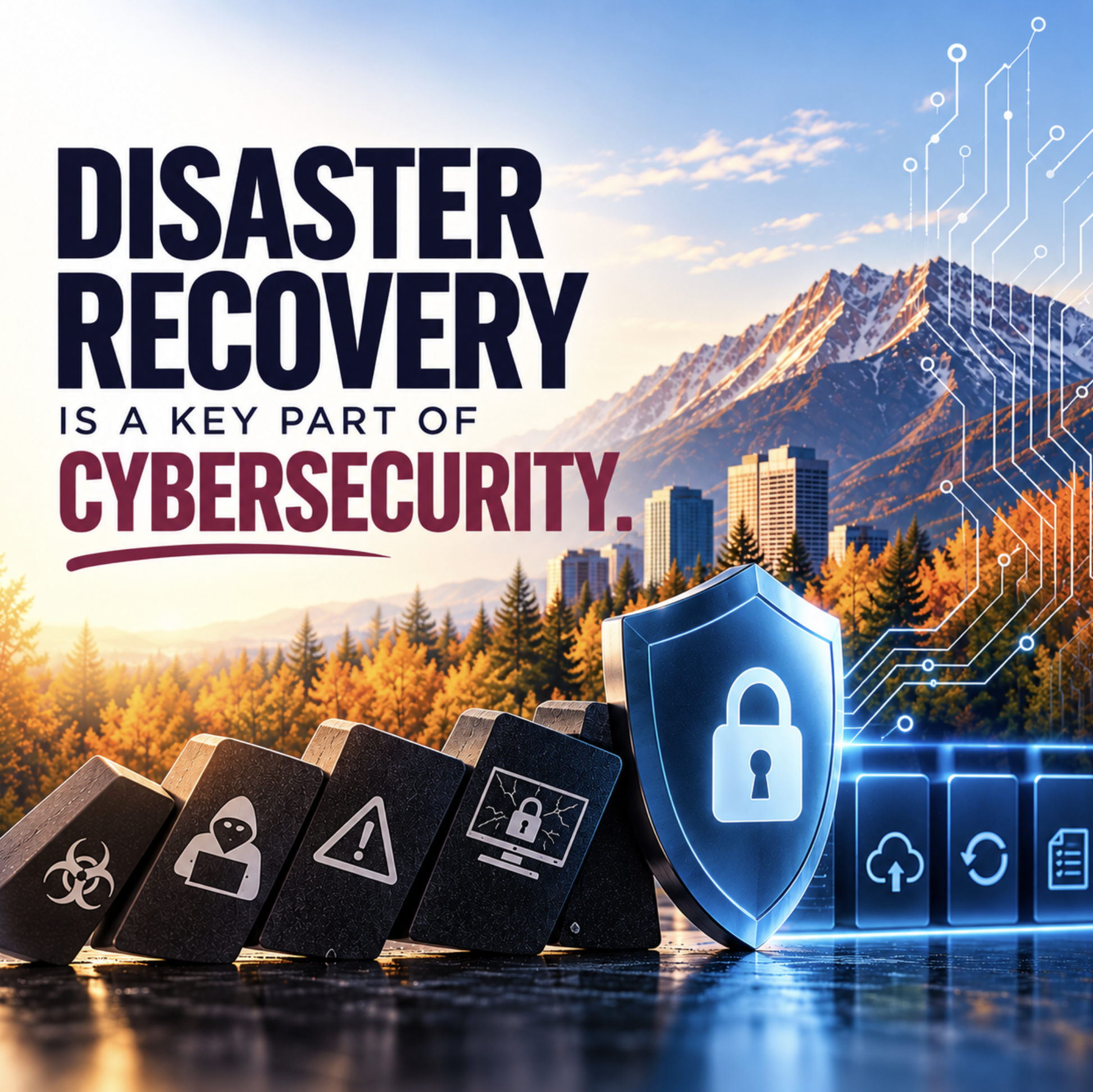
That is where disaster recovery becomes an essential part of cybersecurity.
Cybersecurity Is About Prevention and Recovery
A strong security strategy should make it difficult for attackers to get into your environment. But it should also limit the damage when something gets through.
Think of disaster recovery as your safety net.
If ransomware locks employees out of critical files or systems, having secure, tested backups can give your organization another path forward. Instead of relying entirely on the compromised environment, your IT team may be able to restore clean systems and data.
But that only works if the recovery strategy was established before the incident.
A Backup Is Not the Same as Disaster Recovery
One of the biggest misconceptions businesses have is that having backups means they have a disaster recovery plan.
Backups are an important component, but disaster recovery goes further.
A comprehensive recovery strategy considers questions such as:
- Which systems are essential to keeping the business operational?
- How frequently should critical data be backed up?
- Are backups protected from the same threats as production systems?
- How quickly can systems and data be restored?
- Who is responsible for recovery during an incident?
- What systems need to come back online first?
- How will employees communicate if normal systems are unavailable?
- When was the recovery process last tested?
Simply seeing a successful backup notification does not answer those questions.
Ransomware Makes Recovery Planning Even More Important
Modern cyberattacks are often designed to disrupt the business, not simply steal information.
Ransomware can encrypt systems and prevent employees from accessing the applications and data they rely on every day. Some attackers may also attempt to compromise or delete backups to make recovery more difficult.
This is why backup security should be considered part of cybersecurity.
Organizations should evaluate whether their backup strategy includes appropriate protections such as separation from production environments, strong access controls, multiple copies of critical data, and protections designed to prevent unauthorized modification or deletion.
If an attacker compromises your network, you do not want them to have an easy path to your recovery systems too.
How Much Downtime Can Your Business Handle?
Disaster recovery planning also forces businesses to answer an important operational question:
How long can we realistically function without our technology?
For some organizations, several hours without a critical system can create significant disruption. For others, even a few minutes can affect customers, employees, or revenue.
Businesses should establish realistic recovery objectives based on the importance of each system.
Your accounting platform may have different recovery requirements than an internal file archive. Email may have different requirements than a mission-critical line-of-business application.
Prioritizing systems helps your IT team know what needs to be restored first instead of making those decisions in the middle of a crisis.
Your Disaster Recovery Plan Needs to Be Tested
A recovery plan that has never been tested is still an unknown.
Technology environments constantly change. New applications are introduced, employees change roles, servers are replaced, cloud services are added, and data grows.
Your recovery strategy needs to evolve with those changes.
Testing can help identify missing data, configuration problems, outdated documentation, unexpected dependencies, and other issues before an actual emergency.
The goal is to answer a simple question with confidence:
If we needed to recover tomorrow, could we?
Build Cyber Resilience, Not Just Cyber Defense
Cybersecurity cannot be measured only by whether an organization successfully prevents every attack.
Resilience matters too.
A resilient business has multiple layers of protection designed to prevent incidents, detect suspicious activity, respond quickly, and recover when necessary.
That means disaster recovery should not sit in a separate conversation from cybersecurity. The two should work together.
At Bespoke Technology Group, we help Colorado businesses evaluate their cybersecurity, backup, business continuity, and disaster recovery strategies so they are prepared for more than the best-case scenario.
Do you know how quickly your business could recover from a cyberattack?
If the answer is unclear, it may be time to put your disaster recovery plan to the test. Contact us today to learn more!